

Hey, everyone! My name is Jordan, and I have a Ph.D. in Economics from the University of Pennsylvania. I want to ask important questions and answer them meaningfully using the hard work economists have put into their research. If you learn anything interesting from this, please like, share, and subscribe!
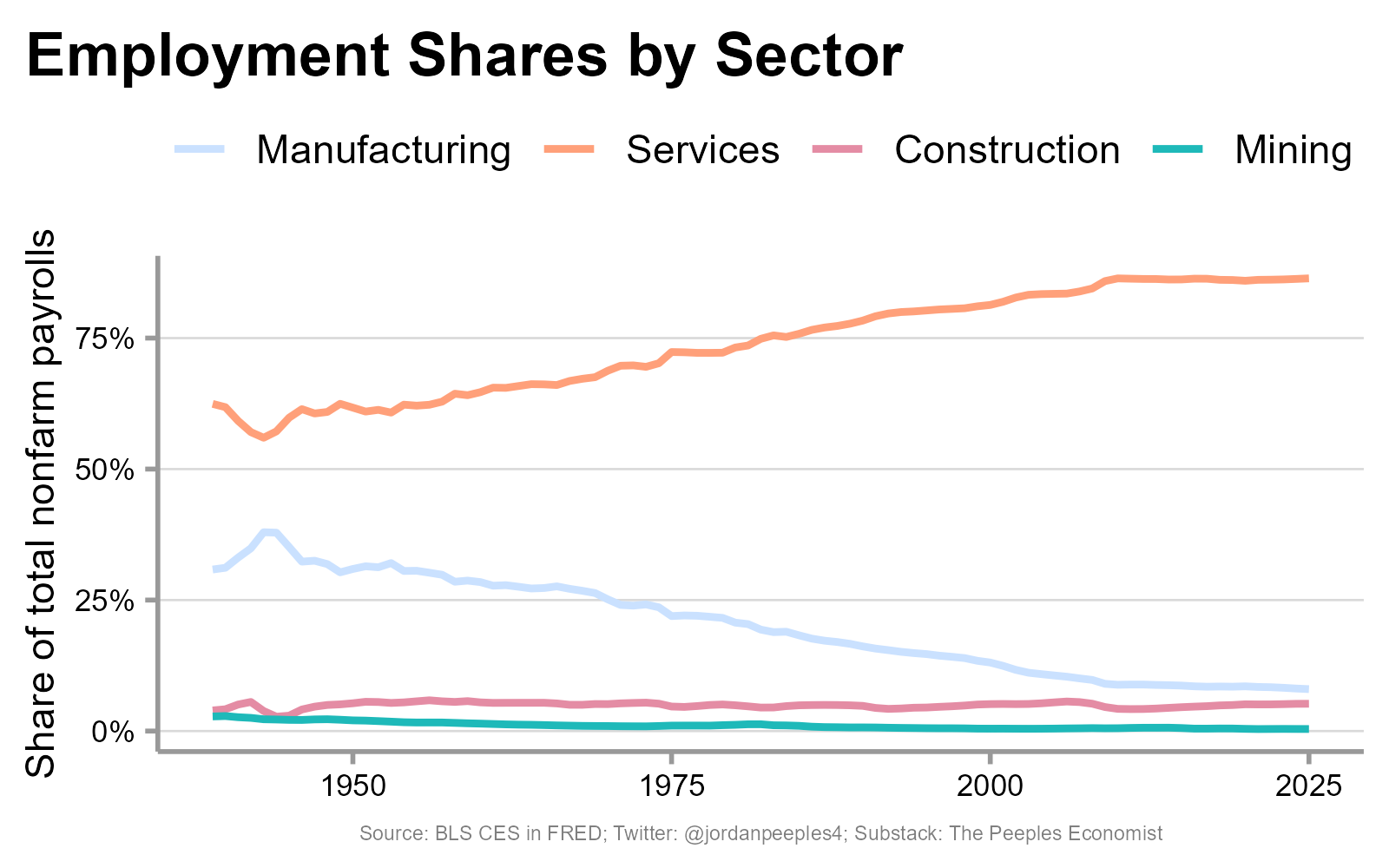
It’s 1950 — a pivotal time in the U.S. when it became involved in the Korean War, when birth rates were increasing as part of the “Baby Boom,” and when 30% of people worked in manufacturing. During this time, mill villages were still around but already in decline. These villages, which were built by the mills themselves, shaped not just people’s jobs but their entire way of life. Ethel Marshall Faucette, who spent five decades working in one such community, described what it was like to grow up and raise a family in a mill village. The mill village existed for generations within her family and affected not only the time she worked there but also her lifestyle outside of work. By the mid-1970s, however, most of these villages had disappeared.
As mill villages were fading, a new style of one-story, horizontal factories had become the dominant face of American manufacturing. These plants mostly produced cars, steel, food, and clothes. Unions were at their peak during this time; benefits from these unions usually included higher wages (which contributed to much lower wage inequality at the time), health insurance, and pension plans.
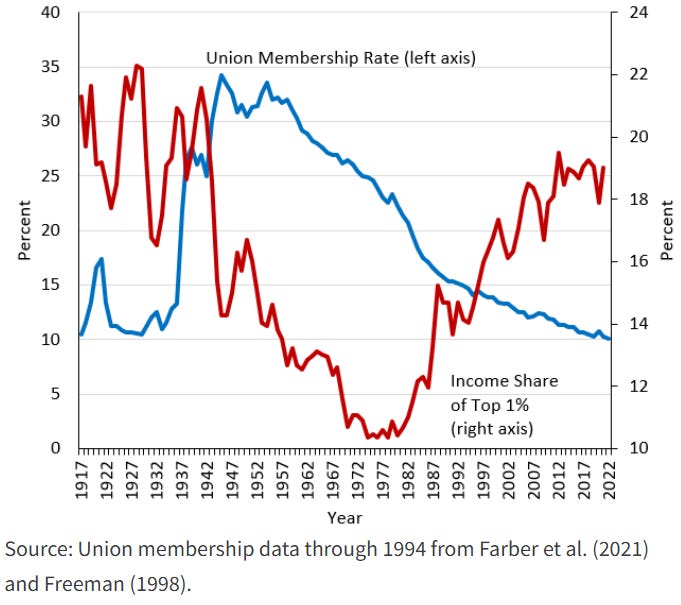
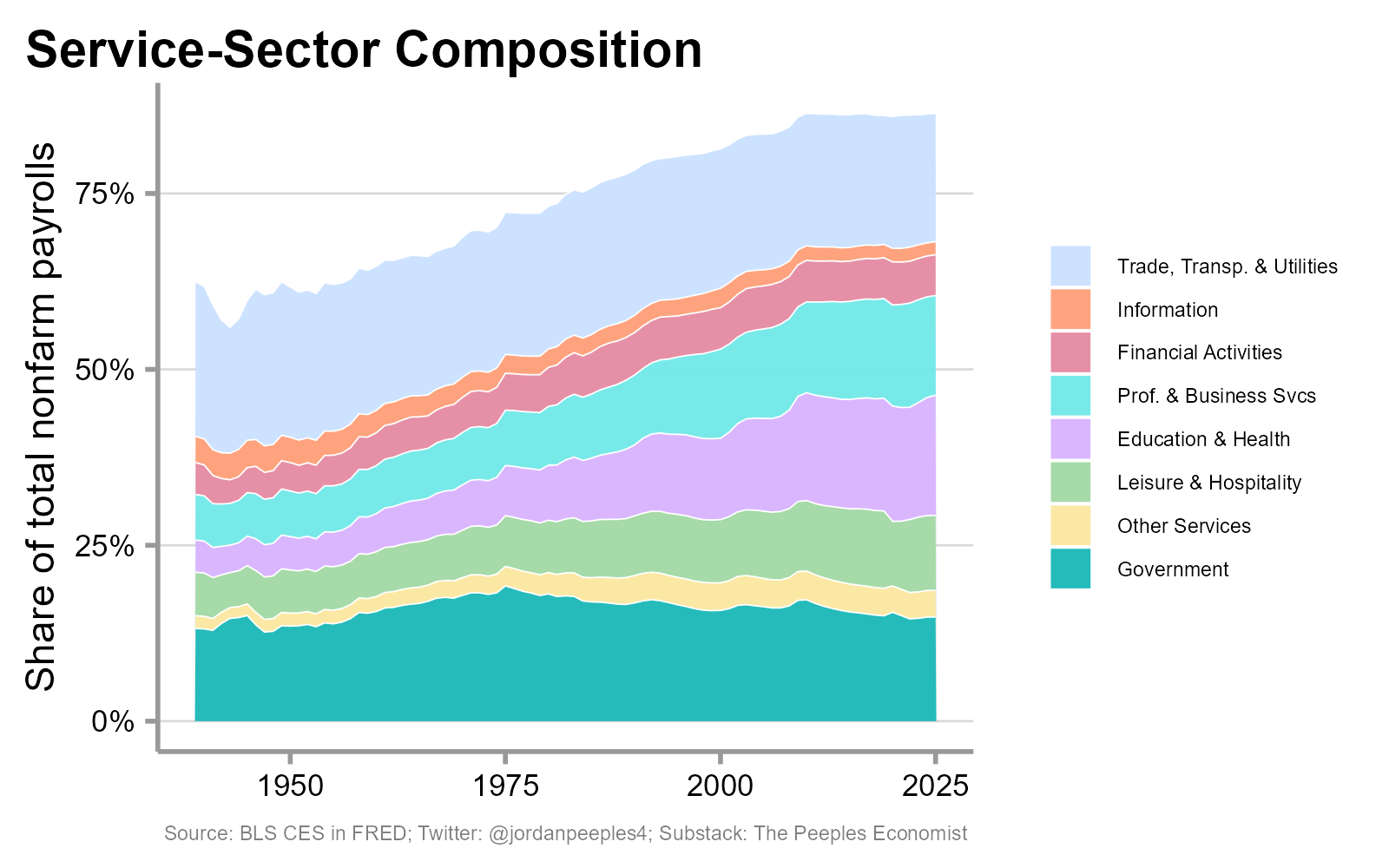
Since 1950, the share of Americans working in manufacturing has steadily declined, and with it, the story of the unionized factory worker began to fade. Although the total number of manufacturing jobs didn’t start falling until around 1980, the shrinking percentage of workers in the sector showed that the economy was shifting elsewhere. More and more people found jobs in the growing “service sector,” which included roles like nurses, teachers, and financial workers. Much of this growth came from healthcare, which became one of the largest sources of new jobs, as shown below.
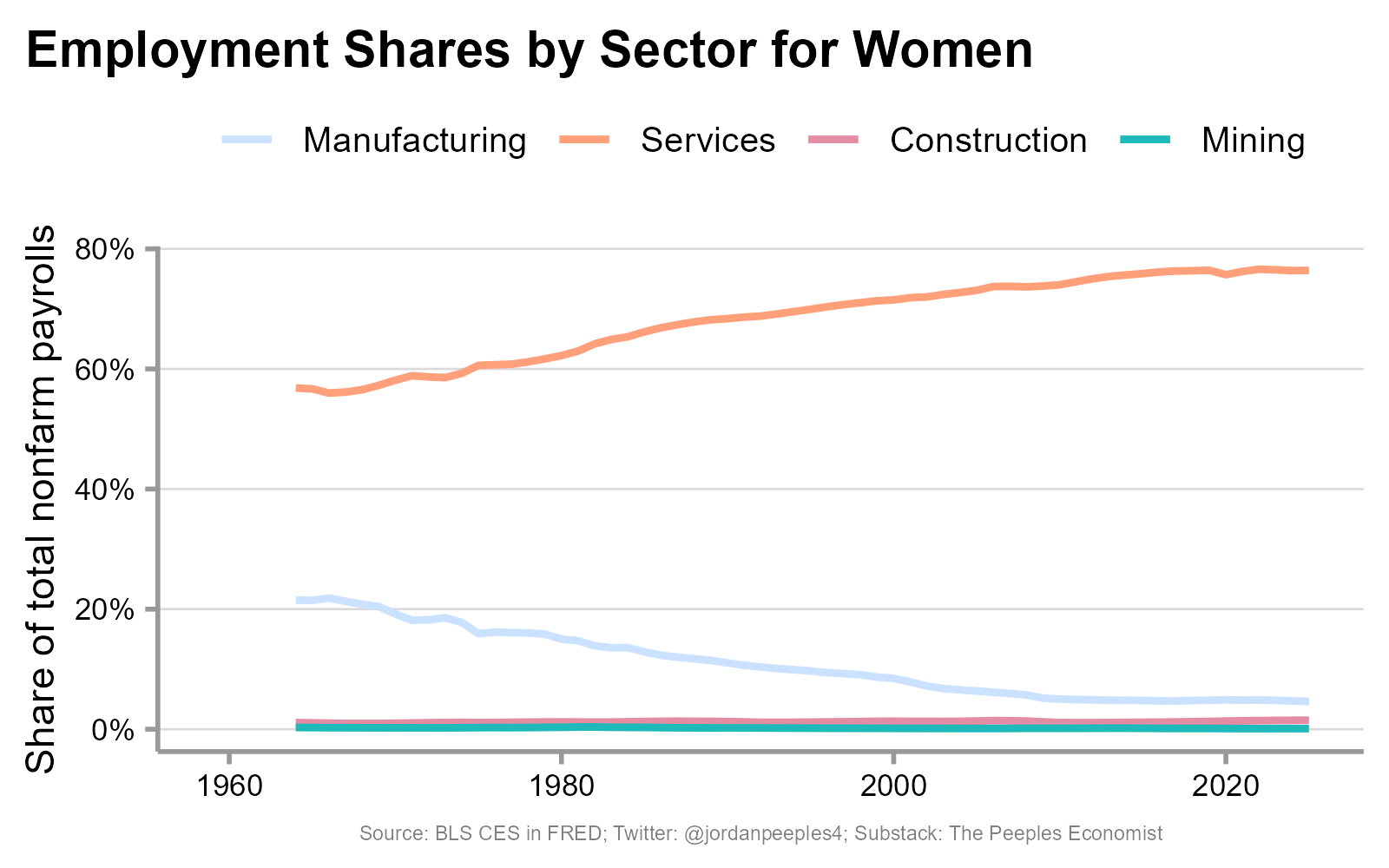
At the same time, another major shift was happening in the workforce: more women were entering paid employment. Women were more likely to work in service jobs, such as teaching and nursing, than in factories. Still, as the graph shows below, women experienced the same broad pattern of movement into the service sector as the overall workforce.
Manufacturing used to be foundational for the American economy. My goal in this post is to go through reasons for why this trend has been happening and what this potentially means for the future. The main reason is simple: it’s a matter of supply and demand.
Supply and Demand:
Over time, manufacturing became more productive than the service sector. Since 1950, fewer and fewer workers were needed to produce the same amount of goods, such as cars, clothes, or steel, thanks to inventions like industrial robots and automated control systems. To put it in perspective, a factory worker who might have built 30 cars a year in 1950 can now produce 50 cars a year with the help of modern technology. Service jobs also became more efficient, but their productivity gains were not as dramatic.
With increasing productivity comes decreasing prices; when a manufacturing plant can make a car for cheaper, it can reduce the price of the car to sell more cars overall. One paper builds on an argument that because productivity rose much faster in manufacturing than in services, the price of manufactured goods dropped relative to services. This shift encouraged people to spend more on services, which in turn drew more workers into service jobs. Another paper showed that this movement of workers out of manufacturing and into services actually slowed overall economic growth (i.e. the growth in real GDP or real economic output) in the U.S., since service jobs tend to be less productive than factory work.
Think of it this way: imagine a factory worker who used to make one refrigerator a day but can now make five. Because the plant can produce more for less, it lowers the price of each fridge. But even if refrigerators get cheaper, you’re unlikely to buy more than one; you will probably just look for a nicer model instead. That means you now have extra money to spend on other things, like hiring a babysitter more often or going out to eat. In economics, this happens because goods and services are called “complements”: a refrigerator can’t replace childcare, but people want some combination of both.
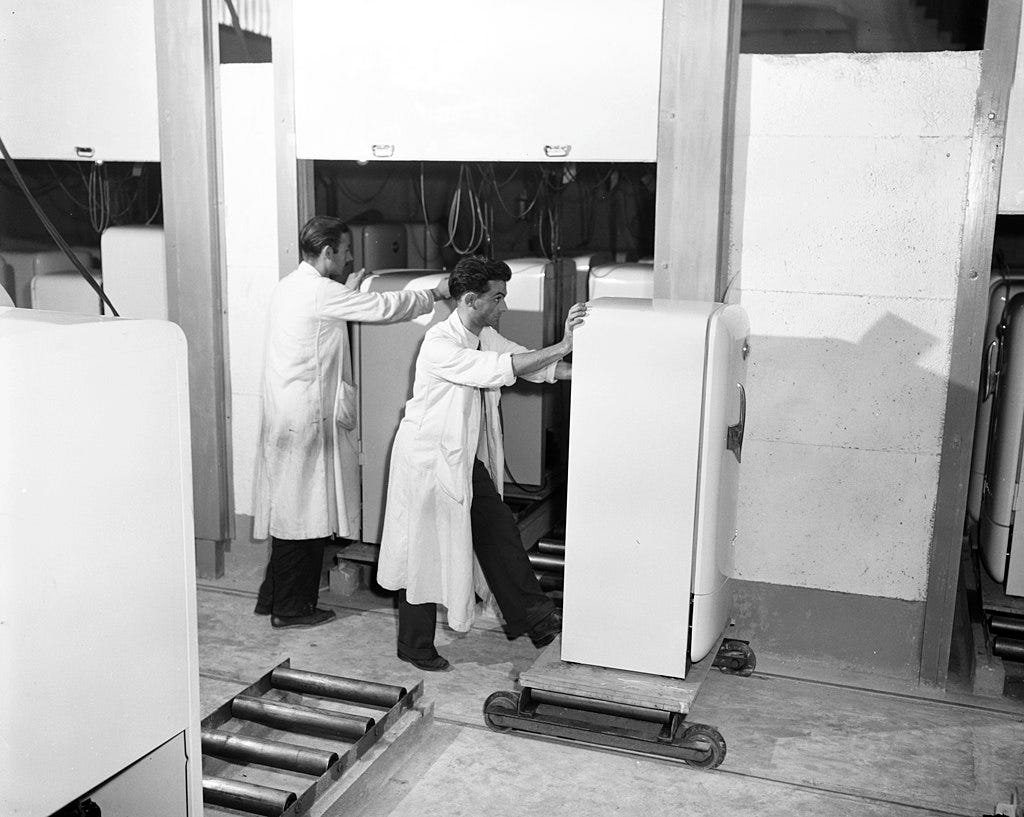
As spending shifts toward services, companies in those sectors grow and hire more workers, pulling labor away from manufacturing. One influential paper showed that this complementarity between goods and services is key to explaining why workers moved so strongly into the service sector.
But looking only at the relationship between goods and services doesn’t fully explain the big shifts in employment from agriculture to manufacturing before 1940 and from manufacturing to services after. Economists have developed another idea to fill this gap: as people’s incomes rise, they eventually buy all the basic goods they need for their homes, and then begin to treat services as luxuries. Returning to the refrigerator example, imagine you get a raise. Instead of buying another fridge, you might splurge on a spa treatment or a nicer haircut. In fact, you may even opt to ask a repairman to fix the fridge’s issues instead of buying a new fridge. Economists call this behavior “non-homothetic preferences.” When mathematical models in papers include it, these papers can much better explain the long-term shift from farming to factories and then to service-sector jobs.
One study combined the two ideas mentioned above: goods and services being complements, and people shifting toward services as their incomes rise. It found that rising incomes explained most of the movement of workers from manufacturing into services. Another well-known paper showed that “non-homothetic preferences” (remember — rising income goes toward spending more money on services) were especially important for matching the historical patterns. Together, these studies do a good job of explaining the long-term trend, but over the past two decades, other factors have also shaped the story.
Trade
In the early 2000’s, trading with China began growing rapidly, in part due to its entry into the World Trade Organization in 2001. China could produce goods at a much cheaper price than manufacturing plants in the U.S. This increase in competition made some manufacturing businesses reallocate employment to Chinese operations and made some plants drop out altogether due to decreased profits.
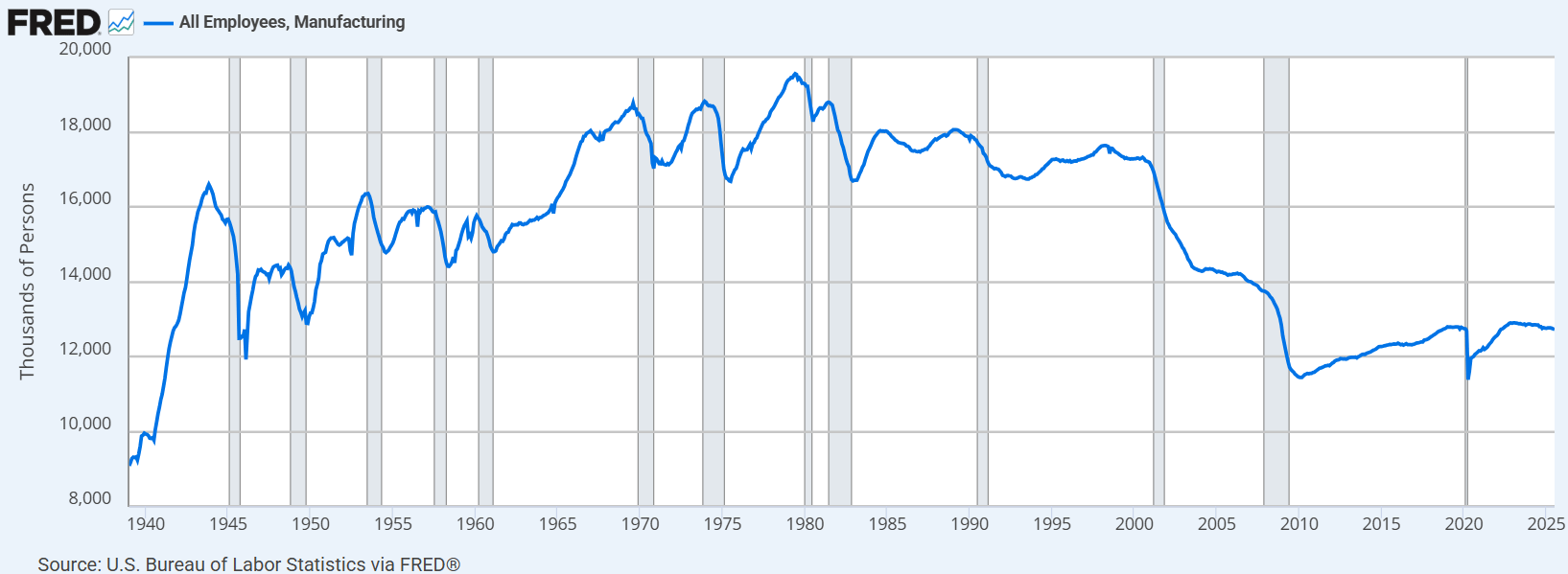
Many studies have shown that rising demand for Chinese imports had a major negative impact on U.S. manufacturing. One landmark paper found that import competition from China explained about one-quarter of the decline in U.S. factory jobs between 1990 and 2007. Another study, using a comprehensive economic model, estimated that China accounted for about 16% of the job losses from 2000 to 2007. These figures refer to total manufacturing employment, not just the share of workers. Overall, the number of factory jobs started falling around 1980, with the steepest drop beginning in the early 2000s. The chart below shows this decline.
Automation
And then there’s the hot topic: automation. Most people think of it simply as machines replacing workers — while that’s sometimes true, the story is more complicated. Sometimes automation makes companies so much more productive that they expand, which can actually create new jobs. Still, in manufacturing specifically, automation may have reduced the total number of jobs, leading to jobs created in other sectors like the services sector. One study found that while automation can cut employment in one industry, it often boosts employment in others, which helps explain why overall job growth has continued even as factory work has declined. Another study saw this happen with robots in Germany — workers moved from manufacturing to services in local labor markets.
Just how much automation has decreased employment in manufacturing is hard to estimate because the idea of automation itself is hard to estimate. One paper considers businesses adopting industrial robots and finds that, while employment increases for the robot adopters, overall industry employment declines. Another paper finds a decrease in employment with robot adoption in the U.S.
Conclusion
Today, very few Americans work in factories. Most of this shift is explained by rising productivity in manufacturing, which means fewer workers are needed, and by the fact that people now spend relatively more on services than on goods. In recent decades, competition from China and advances in automation have also played major roles. While manufacturing employment has decreased significantly, this does not necessarily mean relative manufacturing output has declined — the title of this article may be slightly misleading in this way. What it does mean is that the vast majority of Americans now work in service-sector jobs, and Americans are no longer making “things.”
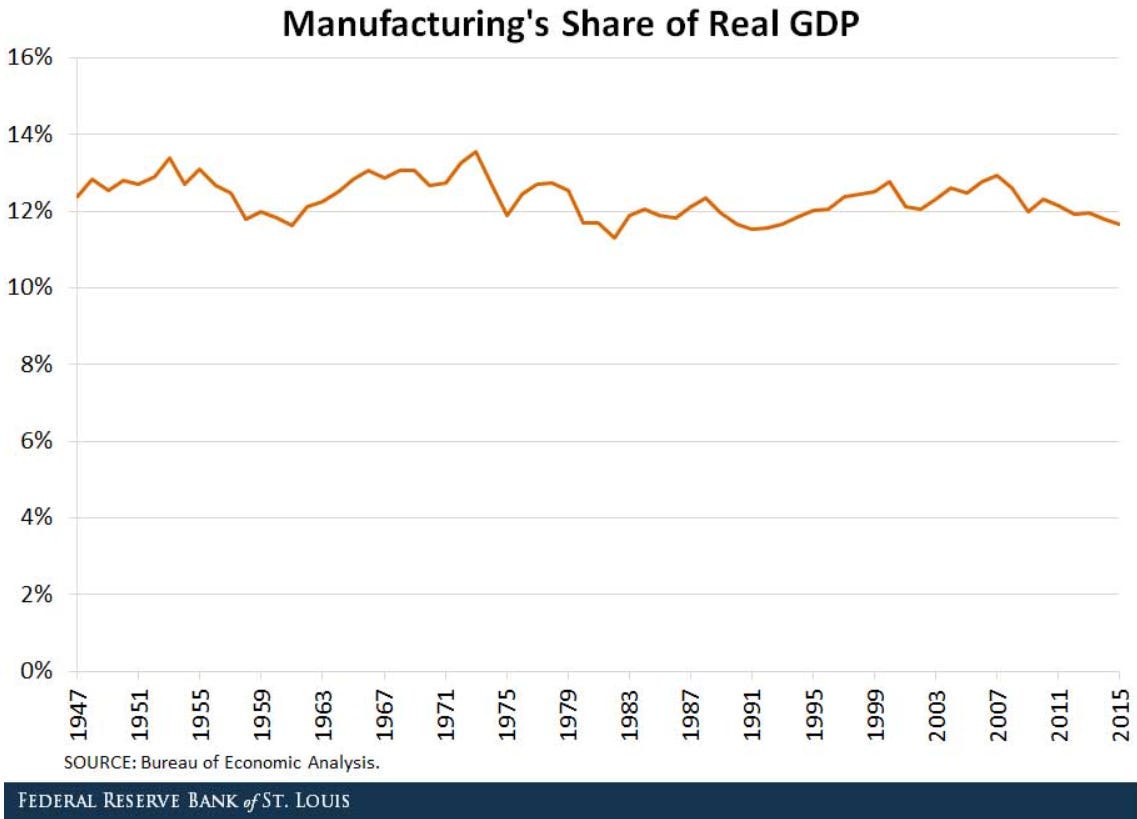
The decline of manufacturing jobs has brought serious challenges for workers and communities. One paper found that declining local manufacturing employment led to decreased overall employment, decreased wages, and increased opioid deaths. The transition from manufacturing to service-sector jobs has never been easy, but since 2010, that shift has slowed considerably — perhaps we have reached the end of the transition. Now, the U.S. manufacturing plant looks more like a sleek, efficient room full of robots and lean engineering with much fewer production workers compared to 1950.
A very simply TL;DR: Manufacturing employment has decreased since 1950, and American workers are now more likely to work as nurses, teachers, business people, etc. This was mostly due to supply and demand. Making things in manufacturing became more efficient while working in a service did not become as efficient. This is what allowed the prices of things like refrigerators, ovens, clothes, food, etc. to decrease. When these prices decreased and everyone’s income increased, people began to demand more services, so employees moved toward services. Cheap Chinese goods and automation became major factors after the year 2000.
TLDR: “Psych! We do still make things after all.” 🙂
The title of this piece is wildly misleading, as the author admits near the end of it. *America* makes more stuff than ever. U.S. industrial capacity and output are at or near all-time highs:
https://fred.stlouisfed.org/series/CAPB50001S
https://fred.stlouisfed.org/series/INDPRO/
The point of the article is really that only a minority of *Americans* make physical stuff anymore. But that's hardly news. It's been the case since the 1950s when the number of workers in the service sector exceeded that in manufacturing and agriculture combined. The percentage of American workers employed in manufacturing peaked at less than 39% back in 1943 and is currently below 8%:
https://fred.stlouisfed.org/graph/?g=1DQHC
But that long decline predated both NAFTA and the grant of most favored nation trading status to China. The much-hyped "China Shock" accounted for 2.5 million jobs over a period of 7-8 years, but there's more churn than that in U.S. job markets every two months.
And the Rust Belt started rusting long before NAFTA as well. Factories were driven out by predatory cities and labor unions who assumed that companies were trapped by the huge investments that they'd made in their facilities. But the milk cow eventually left for greener pastures in low-tax, low-regulation, right-to-work Southern and Western states. The cost of relocation was high. Not only did companies abandon expensive facilities, but they also lost the economies of agglomeration associated with long-standing relationships with suppliers, transportation facilities, professional societies, schools tailored to their needs, and more. But the cost of staying was much higher. Rust Belt communities that learned their lesson and created business friendly environments have since prospered.
In short, the author misdiagnoses the problem. The real problems are overregulation, which increases the cost of housing, healthcare, and higher education and which makes workers less mobile; poor public education; and welfare policies that discourage marriage, work, and saving.